Validated > 99% Lab-grade Peptides
Just How To Review A Peptide Purity Test: Hplc, Mass Spectrometry And Coa Analysis NAD+ For Uk Researchers 2026
Likewise, remember that "research-grade" peptides are meant for the laboratory bench and come with high pureness and identity checks yet are not created as medications. Constantly inspect that your peptide comes with appropriate logical data (HPLC chromatogram and MS results) and is identified for study use. Armed with this expertise, you can with confidence analyze tags like "95% pureness, research study grade" and use those peptides to drive your experiments without confusion. Expertise of purity levels will likewise guide you if you ever need a greater pureness peptide for a particularly delicate assay. In the end, getting the purity degree right means a lot more reputable scientific research-- which's the best objective for any kind of researcher. With years of logical testing experience and progressed instrument systems, BOC Sciences offers comprehensive peptide quality screening services across the whole process from raw materials to formulas.
The liquified peptide example is infused into a stream of liquid solvent (the mobile phase) that flows through a tube loaded with little fragments (the stationary stage). Various particles "stick" to those bits with different strengths, so they take a trip via the column at different speeds. Subtle distinctions in resources pureness and structure can result in incongruities in the activity of the final product.
Services
High purity is desirable since even little impurities might interfere with experimental outcomes or interpretations. This short article will certainly damage down how peptide pureness is gauged, why it's distinct from peptide identity, what the typical purity levels (95%, 98%, 99%) symbolize, and what "research-grade" suggests in method for peptide reagents. Numerous peptide programs face logical uncertainty before they fail medically. We use advanced reverse-phase HPLC to identify the pureness of client peptide samples.- Accreditation by relevant bodies (such as ISO/IEC or accreditation for GLP/GMP compliance) is a strong sign of high quality.
- BOC Sciences provides increased security, light security, and chemical destruction experiments to systematically examine formulation security risks.
- If the major peak has a noticeable "shoulder"-- a bump on one side-- that frequently indicates a very closely relevant contamination (like a removal peptide) that the column couldn't completely settle.
It is one reason correct peptide storage and reconstitution practices issue. Partial peptide fragments can result from incomplete synthesis or post-synthesis degradation. These fragments are typically smaller than the target peptide and may elute at various retention times.
What Is Hplc? The Fundamental Concept
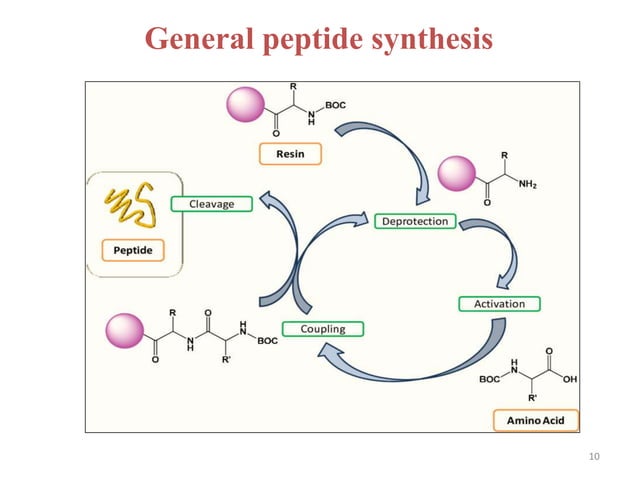
While peptide purity isn't the only aspect, making use of improperly defined reagents is a recognized factor to irreproducible outcomes. For a 10-residue Peptide Blend peptide with 99.5% combining efficiency, you 'd expect about 95% of the end product to be the full-length sequence prior to purification. For a 30-residue peptide at the very same efficiency, that goes down to roughly 86%. This is why much longer peptides are tougher to generate at high pureness and normally set you back more. Pureness is the percentage of publications in the shipment that have every page printed correctly, in the right order, without any missing phases and no extra pages stuffed in. A 95% pureness indicates that out of every 100 "books" in your batch, 95 are excellent copies and 5 have some kind of error.
Chromatography Column
If the COA lists "complete pollutants", that matches the purity figure (e.g., 98% pureness implies 2% overall impurities). Numerous COAs additionally define recognized or "specified pollutants" versus unspecified ones, each with their individual percents if above a particular limit. This degree of information assists scientists understand if any kind of minor peptide byproducts exist. If you see numerous big peaks of comparable elevation, you're taking a look at either a low-purity sample or a mixture. If the primary optimal has a noticeable "shoulder"-- a bump on one side-- that usually shows a closely associated impurity (like a deletion peptide) that the column could not totally resolve. The peptide is travelled through a basic purification step (typically gel filtering or a quick reversed-phase clean-up) to get rid of salts, small-molecule byproducts, and scavengers from the cleavage action.
Along with HPLC and MS, specialized laboratories might utilize orthogonal methods for included accuracy. As an example, capillary electrophoresis can be utilized to divide extremely hydrophilic peptides or to double-check outcomes, and MALDI-TOF mass spectrometry can help in mapping bigger or customized peptides. Numerous peptide producers or distributors will offer a COA (Certificate of Analysis), as an example our bpc 157 tb 500 mix, that consists of the pureness percent by HPLC and identity verification by MS for every set. Top-tier laboratories typically report peptide purity well over 95%, regularly ≥ 98-99%, by using advanced HPLC and MS evaluations. They also evaluate both basic materials and ended up peptide vials, which helps catch any pollutants, degradation items, or solution incongruities.